
On the back of watching Lyon get the better of Manchester City in the UCL quarter-finals, a lot of people will be laughing at City for losing to a team from a supposed ‘farmer’s league’. Some more “casual” football supporters are quick to put down the foreign big leagues – but is there substance behind such a blanket statement? We are going to take a dive across a two-part posting into a couple of factors. Part 1 (this article, in case you couldn’t tell by the title) is a comparison of results in the two major European tournaments; the Champions League (UCL) and the Europa League (UEL). Competition performance is going to be analysed from the 2014/15 season to this season.
(To judge performance, I will score the best results for each team using this points system: win = 4 points, runner-up = 3 points, SF = 2 points, QF = 1 point. The points will be given to a team for their best result, and every time they match it. So for example, Real Madrid have won the UCL three times in the last five years, therefore they earn 12 points as they have achieved their best result 3 times. Similarly, Bayern have achieved their best result of Semi-finals 4 times, meaning they earn 8 points. Each team’s score will be taken to create a total score for each ‘big 5’ leagues. In the event of a tie, the team with more teams who have had multiple late round appearances finishes higher.
Does that make sense? I hope so. Hopefully you can see how I reach some sort of conclusion… if not just skip ahead. 🙂 )
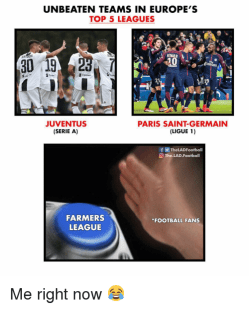
1: UCL Performance
League table:
Spain: 20 points (4 wins, runner-up, QF) (3 Multi-appearance teams)
England: 12 points (Win, runner-up, SF, 2 QF) (2 Multi-app teams)
Germany: 12 points (5 SF, 2 QF) (1 Multi-app team)
France: 6 points (3 SF) (2 Multi-app teams)
Italy: 6 points (Runner-up, SF, QF) (1 Multi-app team)
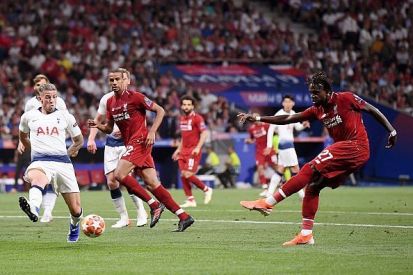
Winning has been dominated by Spanish giants in the latter half of the 2010s, including an all-Spanish final between the Madrid teams in 2016. Additionally, the 3 big Spanish teams have all reached the quarters at least 4 times, buoyed by Sevilla getting to the QF in 2018. England has had the most teams reach the quarter finals in the last 5 seasons, with Leicester reaching once in 2017, Man United and Spurs both in 2019, plus Man City and Liverpool with multiple appearances. England also boasts an all-English final between Liverpool and Spurs (2019) to boot, evidencing a mini-revival in English European performance. Despite not registering a single Final appearance, Germany have scored rather well – I’m sure Bayern’s back hurts from carrying the German effort year after year. After their demolition of Barcelona last night too, it would be plain rude to not call Bayern favourites for this year’s competition too.
This small data collection reflects France poorly, to be honest; two semi-final appearances, and no final appearances. They do have a good chance to reach a final this year, with PSG and Lyon both having fighting chances (surely PSG should get there over Leipzig?). Finally, Juventus’ final loss in 2015 has been the high point for them (and Italian sides in general) in the Champions League. A solid effort from Atalanta and Roma’s fairytale run to the Semi-finals in 2018 renders the Serie A UCL performance very hit-and-miss.
The UCL is generally a group of repetitive European elite teams – almost adding fuel to the fire that certain leagues are considered too top heavy. Only 6 teams have made it to at least 3 QF appearances – suggesting there is a good level of variety still to fill the other slots year-on-year. These 6 teams are: Juventus, Barcelona, Real Madrid, Atletico Madrid, Bayern, and Man City. Three being from Spain implies that La Liga has a large advantage over its competitors – which may not be the case. A better indicator of league quality depth, therefore, could be the Europa League.
2. UEL Performance
League Table:
Spain: 19 points (3 wins, 3 SF, QF) (2 Multi-app teams)
England: 15 points (2 wins, 2 runner-up, QF) (2 Multi-app teams)
Italy: 7 points (3 SF, QF) (1 Multi-app team)
Germany: 7 points (SF, 5 QF) (0 Multi-app teams)
France: 5 points (Runner-up, SF) (0 Multi-app teams)
A bit like the Champions league, the start of this five-year window is dominated by Spain. Sevilla racked up back-to-back wins, with 2 other La Liga teams joining them in the quarters in 2016. Further ammo to the case of La Liga is Atletico’s victory in 2018. I’d also like to point out that 6 different Spanish teams reached the QF in 5 years – to me this denotes the depth in quality of La Liga.
The Premier League has been represented well in recent years – no doubt attributed to the added incentive of Champions League qualification for Europa League winners since 2015. Nevertheless, Man United (2017) and Chelsea (2019) have both won the competition, as well as runner-up appearances from Liverpool and Arsenal; last year’s all-English final was testament to a great European season from the Premier League.
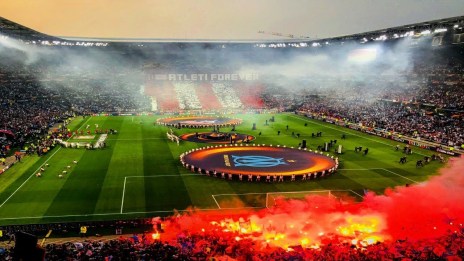
Germany and Italy have both had a variety of teams reach the quarter finals – particularly Germany, with an impressive 6 teams in 5 years. Despite this, both leagues have failed to muster a final appearance between them, with Frankfurt coming closest by losing on pens to Chelsea in the 2019 SF. Finally, France again give a disappointing representation of Ligue 1, with only two appearances in five years. The cup runs of Lyon and Marseille, however, were impressive; a semi-final performance for OL in 2017, with Marseille going a round better and reaching the 2018 final. Unfortunately, the Southern French side were outclassed by Atletico.
The variety of teams -in particular for Germany, England and Spain – provides solid evidence (imo) that these leagues have a healthy, even level of comparative competition, with solid depth of team quality in each league.
Summary
So what does this points system prove? First off, it evidences the dominance of Spanish sides across the five year period; 4 UCLs, 3 UELs, 8 different teams reaching at least the quarters of European competition. This puts them head and shoulders above the rest. A rather distant second comes the Premier League. With a Champions League win (shoutout Liverpool), a couple of UELs and 7 different teams represented, this league displays a solid performance that definitely progressed toward the end of the decade. This season, however, English football in the Champions League has taken a disappointing step backwards.
Serie A, Bundesliga and Ligue 1 rely heavily on their top sides for performance in the UCL; I do not, however, believe that this makes the rest of their league poor in quality. Both Italy and Germany can boast 7 different teams from their respective leagues making it to the latter stages of Europe; the only element really letting them down is the lack of final appearances in my opinion. France do lag behind the other four leagues in terms of European performance (4 different teams total), but compared to the rest of Europe they hold well. Their UCL semi-final berths for three teams beats all other leagues (Ajax are the only non-big 5 league team to reach the semis in the last few seasons); a testament to the strength of all five of these leagues. Although PSG are the most regular fixture, Monaco a few seasons ago and Lyon this season prove that French sides deserve to be considered among the top European outfits. With a golden opportunity for a French side to reach a Champions league final this season too, it would be unfair to disregard Ligue 1 as a Farmer’s league outfit.
So, the performances of traditional big 5 league teams dispels the myth of ‘farmer’s leagues’; the quantity and variety of teams from each league proves the superior standard of Ligue 1, the Bundesliga, La Liga, Serie A and the Prem – at least on the European stage. Its not just the European elite sides representing their leagues on deep cup runs! The upper half of each big 5 league produces relatively similar numbers of different teams reaching the latter stages of Europe. But what about comparing an ENTIRE league financially against another? This is where the the moniker is truly tested, as it is widely believed that certain leagues have no competition once you get past first or second. An economic part 2 should be coming soon.
 sportsopinionwindow.game.blog